You’re paying for the click. Google Ads, a Facebook boost, or just the years of work it took to rank on page one organically — either way, someone searched, saw your business, and tapped through. That’s the hard part. That’s the part you budget for, track, and lose sleep over. And then, on a huge percentage of small business sites, the visitor sits there watching a blank screen for three, five, ten seconds before anything loads, and they leave. Not because your services are wrong for them. Not because your prices scared them off. They never saw any of that. They left because the page didn’t load fast enough, and they’ll never tell you why.
This is the part of a marketing funnel almost nobody watches. Owners obsess over ad spend, keyword rankings, and review counts, and rightly so — but the step where a visitor actually arrives at your site and decides whether to stay is usually invisible to them. It happens in under three seconds, it doesn’t show up as a support ticket or a bad review, and it just quietly erases a chunk of the traffic they already paid for.
The research is not subtle
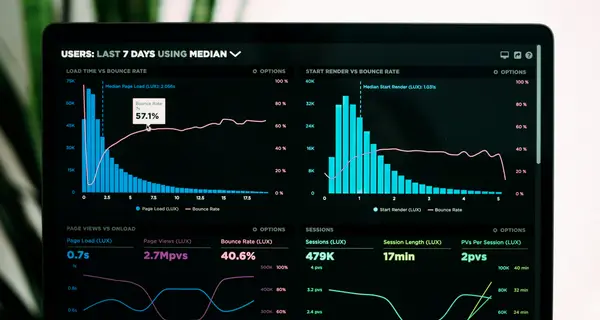
Google and DoubleClick ran a large-scale study on mobile page speed a few years back, and the numbers are blunt enough that they’re worth sitting with. As page load time goes from 1 second to 3 seconds, the probability of a mobile visitor bouncing increases by 32%. Push it to 5 seconds and that probability jumps 90%. At 6 seconds, it’s up 106%. By 10 seconds, it’s up 123% — meaning a visitor is more than twice as likely to bounce as they would have been if the page had loaded in one second.
Here’s the part that should worry more business owners than it does: Google’s research also found the average time to fully load a mobile landing page sits around 15 seconds. Meanwhile, 53% of mobile visitors will abandon a site outright if it takes longer than 3 seconds to load. Put those two numbers next to each other and the picture is ugly. The average site is running about five times slower than the threshold at which most mobile visitors give up.
Translating percentages into actual customers
Percentages are easy to skim past, so let’s put a real number on it. Say a Coeur d’Alene HVAC company is spending $1,500 a month on Google Ads and pulling in 500 clicks. If their site loads in 5 seconds instead of 1, Google’s data says they should expect roughly 90% more of those visitors to bounce before the page even finishes rendering — before they see a phone number, a service list, or a single review. Depending on the baseline bounce rate you start from, that can plausibly mean 60, 80, sometimes over 100 of those 500 paid clicks are gone before your pitch even starts. You already paid for every one of them. The ad platform did its job. The site didn’t.
And this compounds in a way that’s easy to miss: it’s not just today’s ad spend. A slow site quietly taxes organic traffic too, since page experience factors into how Google ranks you in the first place, and it taxes every future visitor for as long as the site stays slow. It’s not a one-time cost. It’s a recurring leak sitting at the very top of the funnel, upstream of everything else you’re doing to grow the business.
Why most owners never notice
The reason this stays invisible is simple: nobody watches their own bounce rate. Business owners check whether the phone is ringing and whether the contact form is filling up, and if those numbers are soft, they usually blame the offer, the pricing page, or the ad copy. Rarely does anyone open Google Analytics, look at average page load time next to bounce rate, and connect the two. And even if they did glance at it, most people don’t have a mental model for what “4.2 seconds” actually means in terms of lost business — it just looks like a stat, not a leak.
That gap is exactly what a speed audit is meant to close. We built a free Speed Audit tool that runs Google’s mobile Lighthouse test on a visitor’s own site in real time — speed score, Core Web Vitals, page weight, the top fixes, and basic security posture — so an owner can see, in about a minute, roughly where their site sits on that bounce-probability curve. It doesn’t fix anything by itself. It just makes the invisible part visible, which is usually the first time anyone’s looked.
Speed is infrastructure, not decoration
We hear “speed” get filed under design preference a lot — something you’d fix if you had budget left over after the logo and the color scheme. That’s backwards. Speed determines whether any of the design work gets seen at all. A gorgeous homepage that takes 6 seconds to render is, functionally, a gorgeous homepage that 106% more people never look at.
This is part of why we hand-code static HTML and CSS instead of building on a database-driven platform. There’s no plugin stack to boot and no database query to wait on, just small, finished files served from a global CDN. The site simply doesn’t carry weight it doesn’t need. On November 7, 2026, we ran Google Lighthouse 13.6.0 on our own homepage (mobile preset with simulated slow 4G, median of 3 runs, lab data): it scored 95 out of 100 for mobile performance, and the whole page weighed 158 KB. For a contractor or a clinic running paid traffic on a real budget, that isn’t cosmetic. It’s the difference between a site that holds the visitors you paid to reach and one that’s leaking them out the bottom before they ever see what you do.
Already stuck with a slow site? Here’s how we rebuild a slow website from the foundation. Based in Spokane? See how we build fast websites for Spokane businesses. Across the state line, our Coeur d’Alene web design page covers North Idaho.